How ESD Bench Matting Improves Electronics Handling and Complements an Efficient Packing Bench
ESD bench matting plays an important role in electronics workplaces where sensitive components must be protected from electrostatic discharge. A properly selected mat creates a controlled work surface that helps dissipate static charge safely. For businesses handling circuit boards, components, and assemblies, combining effective static protection with an organised workstation can improve both product safety and daily efficiency.
Modern electronics work requires surfaces that can withstand regular handling, soldering, cleaning, and contact with tools. ELCOM offers rubber bench matting with static dissipative and conductive layers, designed to provide a reliable route for static charge. Some options are also resistant to solvents, solder splashes, and abrasion, making them practical for demanding workshop environments.
Grounding is essential when using ESD matting. Simply placing a mat on a workstation does not provide complete protection. The mat should be correctly connected to an appropriate grounding system, while operators should use suitable grounding equipment. Regular inspection and testing can help identify damaged surfaces, loose connections, or other issues before they affect sensitive electronics.
Workstation design also influences how effectively employees handle components. A well-planned bench should provide enough room for equipment, tools, documents, and materials without creating unnecessary clutter. Keeping frequently used items within easy reach can reduce movement and improve consistency, especially during repetitive assembly, testing, inspection, or repair tasks.
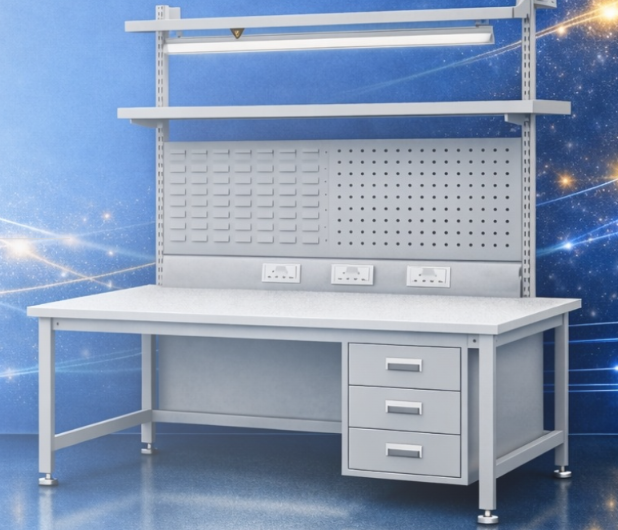
A useful ESD workstation can also be configured with accessories such as shelving, lighting, storage, and grounding connections. These additions help technicians organise their working area while maintaining an appropriate static-control environment. ELCOM provides ESD workbenches and worktops designed for electronics manufacturing, repair, assembly, and other applications where electrostatic protection is important.
It is important to separate static-sensitive electronics work from ordinary packaging activities when planning a facility. A general workstation may be suitable for preparing finished products for dispatch, while electronics assembly requires dedicated ESD controls. Understanding this distinction helps businesses avoid relying on ordinary furniture where specialised static protection is necessary.
Regular housekeeping is another practical part of static-control management. Dust, residues, spilled materials, and unsuitable cleaning products can affect workstation performance and create additional handling problems. Mats should therefore be cleaned according to their material requirements, while grounding connections and accessories should be checked as part of routine workplace procedures.
Businesses should also consider the complete ESD environment rather than focusing on one product. Floor protection, grounding equipment, wrist straps, footwear, packaging, storage systems, and appropriate work surfaces can work together to create a stronger protection strategy. ELCOM provides a broad range of ESD products for building and maintaining controlled electronics work areas.
Choosing suitable equipment ultimately depends on the tasks performed, the type of components handled, available workspace, and required level of static control. A correctly specified workstation can support safer handling while helping employees maintain an efficient workflow. When packaging and dispatch are part of the same operation, a suitable packing bench can provide practical organisation alongside dedicated ESD work areas.


Comments
Post a Comment